|
|
   Vines
planted were on their own roots. Meaning, the Zinfandel vines from
Wente
were pruned in the winter. Vines
planted were on their own roots. Meaning, the Zinfandel vines from
Wente
were pruned in the winter.
A cane, or section, of that pruned vine was cut to approximately 18 inches and then planted in a nursery medium with almost all of the cane underground. At each bud along the cane that was in the soil, roots would form; the above ground buds would form leaves. After a year the cane has a good root system started. It is pulled from the ground, bundled in groups of 25, and sold. The
canes are delivered to the vineyard site in the winter, and buried in
damp
sawdust until the planting is imminent. While our canes were growing,
Gino
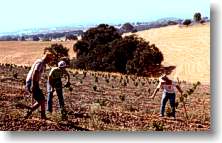
surveyed the vineyard for As soon as a hole was dug, the rest of the family followed. First, the roots of each vine were trimmed, then it was placed in the hole, pushing the roots downward (This may seem silly to mention, but many vineyards are planted by crews who don?t push the roots down and they are plagued by copious amounts of suckers forever after), soil was added, tamped down, then more soil as the vine was heeled in. Fratelli
Perata vines were planted at 520 vines per acre. This was the usual and
customary practice of the day. For us, it also meant that the natural
rainfall
would be adequate for the vines, so The newly planted vines were watered by means of drip irrigation: long black tubes set out along the vineyard row, with emitters dripping 1 gallon of water per vine per hour. This means of irrigation was developed in Israel. It is the most efficient in delivering a certain amount of water to a specific target and relatively little water is used. Another
system that could be used is overhead sprinklers. Here, sprinkler heads
rise above the vine posts. When the water is turned on, the rotating
sprinkler
head waters the whole area. This is useful if there are spring frosts,
as a grape insulated by ice can withstand temperatures below freezing.
Due to our elevation, our vineyard didn?t need this. Here, the cold air
simply flows down the hillsides and away from the vines.
After
the surveying, digging and planting, the irrigation tubes were rolled
out.
Then the emitters were punched into the tube to water each vine. The
grapes
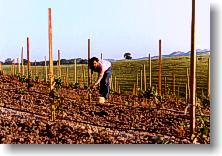
were watered deeply, They were hammered into the ground by hand using an iron cylinder. This, of course, is best done in rain softened ground, which meant carrying 5 or 6 or 7-7foot posts on our shoulder. This was before the 4 wheeler ATVs; but remember, we were young. At
the end of the growing season, each little stick had grown into a low
bush.
The following winter, we chose the strongest cane from each vine to be
trained up the wooden post. The other parts of the bushy vine were
pruned
away. Again, the young vine was watered deeply during the season.
Each
year, each vine required handwork, 520 vines/acre times 25 acres. Life
became cyclical, following the vines? requirements. Winter, the vines
were
pruned and trained. Spring, new growth meant tying the vine to the
post,
then to the trellis wire when they were older. Summer, the young vines
were watered, a few acres at a time. Fall, the grapes are harvested.
|
|
|
 the
layout of vines, water, and roads. Each spot for a vine was flagged.
When
the canes arrived, he used a one-man auger to dig holes 24 inches deep,
following the flags.
the
layout of vines, water, and roads. Each spot for a vine was flagged.
When
the canes arrived, he used a one-man auger to dig holes 24 inches deep,
following the flags.
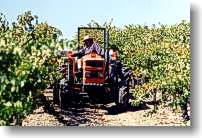 we
wouldn?t need to supplement water during the growing season. And, being
on steep hills, the tractor could still maneuver through the vine row
with
the rows 12 feet apart. Over time, the action of the vineyard disc
would
terrace the hills, making tractor work safer.
we
wouldn?t need to supplement water during the growing season. And, being
on steep hills, the tractor could still maneuver through the vine row
with
the rows 12 feet apart. Over time, the action of the vineyard disc
would
terrace the hills, making tractor work safer.
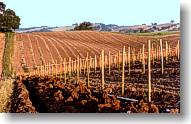
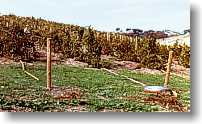 though
not often, their first year in the vineyard. Then wooden posts were
carried
to the field, placed one per vine.
though
not often, their first year in the vineyard. Then wooden posts were
carried
to the field, placed one per vine.